

How Musculoskeletal Ultrasound Helps Diagnose Injuries and Guide Treatment
When you’re hurting, you want to know what’s actually wrong. A thorough physical examination can tell us a great deal, but sometimes we need a closer look at what’s happening beneath the surface.
That’s where diagnostic musculoskeletal ultrasound comes in. Musculoskeletal ultrasound gives us a real-time look at what’s happening beneath the skin, which leads to more accurate and confident care.
- Real-time visualization of soft tissue. We can see tendons, muscles, ligaments, nerves, and joints as they move, which helps us identify injuries and understand how severe they are.
- Distinguishing acute from chronic injuries. Joint swelling shows up clearly on ultrasound, which helps us determine whether an injury is recent or long-standing and guides the right treatment approach.
- Assessing tissue degeneration. We can see whether a tendon or other soft tissue is degenerative and grade its severity, so we can set realistic expectations and tailor a care plan to what’s actually going on.
I’ve been pursuing advanced training in musculoskeletal ultrasound because of its potential to improve how we evaluate injuries, develop treatment plans, and monitor recovery.
What Makes Musculoskeletal Ultrasound Different?
Unlike static images, musculoskeletal ultrasound allows us to observe soft tissues while they’re moving. We can compare an injured area to the unaffected side and examine the specific location where a patient is experiencing pain.
For example, if you’re experiencing shoulder pain when raising your arm, ultrasound can help us see how the tendons and surrounding structures behave during that movement.
This ability to evaluate injuries dynamically is particularly valuable when symptoms only occur during certain activities or movements.
Musculoskeletal ultrasound offers several advantages:
- Real-Time Imaging: Observe muscles, tendons, and joints during movement to better understand the source of discomfort.
- Targeted Evaluation: Examine the specific area where you’re experiencing pain and compare it with the unaffected side.
- Immediate Results: Review findings during the examination without waiting days for imaging results.
- No Radiation: Ultrasound uses sound waves rather than ionizing radiation.
- Greater Patient Understanding: See the affected structures on screen and better understand your injury and treatment options.
Together, these capabilities can help us move beyond an initial assessment of a possible strain or sprain toward a more informed diagnosis and treatment plan.
What Types of Injuries Can Ultrasound Help Evaluate?
Musculoskeletal ultrasound has a wide range of applications, particularly for injuries involving tendons, ligaments, muscles, nerves, and joints.
Tendon and Ligament Injuries
Ultrasound can help evaluate rotator cuff injuries, Achilles tendinopathy, ankle sprains, and conditions such as tennis or golfer’s elbow. It can identify changes in tendon structure, assess possible tears, and help determine whether ligaments have been compromised.
For patients with persistent heel pain, ultrasound can also help evaluate plantar fasciitis by measuring the thickness of the plantar fascia and identifying potential tissue damage.
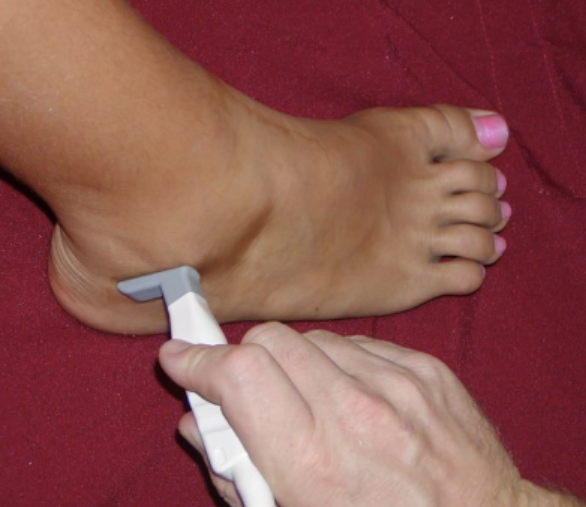
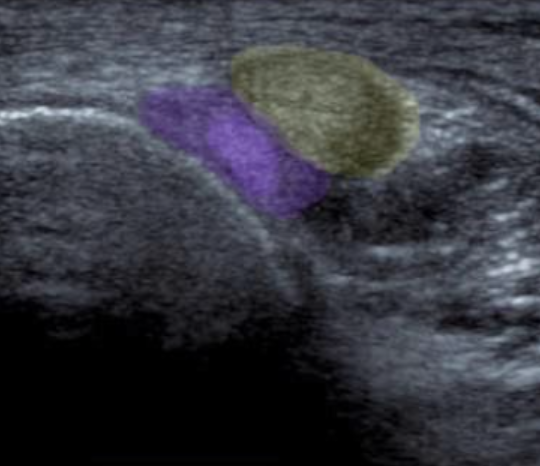
Musculoskeletal ultrasound provides real-time images of soft tissues,
helping practitioners evaluate tendons and identify potential injuries.
Muscle Strains
Hamstring, calf, quadriceps, and other muscle injuries can vary significantly in severity. Ultrasound can help identify the location and extent of tissue damage, including associated bleeding or fluid collections, which may inform rehabilitation and return-to-activity decisions.
Nerve and Joint Conditions
Ultrasound can help evaluate certain nerve entrapments, including carpal tunnel syndrome, by examining nerve size and surrounding structures.
It can also identify fluid accumulation within joints, helping distinguish joint swelling from inflammation or injury involving nearby soft tissues.
Soft-Tissue Conditions
Conditions such as bursitis, ganglion cysts, and certain soft-tissue masses can also be evaluated using ultrasound. In some cases, it can help identify foreign objects, such as splinters, embedded beneath the skin.
Movement-Related Problems
Some conditions are difficult to identify when the body is at rest. Snapping hip syndrome, tendon subluxation, and certain forms of impingement may only become apparent during movement.
Because ultrasound allows us to observe structures dynamically, it can reveal abnormalities that might not be apparent on static images.
How Ultrasound Can Help Guide Treatment and Recovery
One of the greatest benefits of musculoskeletal ultrasound is the additional information it can provide when developing a treatment plan.
For example, shoulder pain caused by tendon irritation may require a different approach than pain associated with a significant tendon tear. Ultrasound can help distinguish between these conditions and provide information that guides treatment decisions.
It can also help us determine whether a patient is a good candidate for conservative care or whether additional imaging or a specialist referral is appropriate.
Beyond the initial evaluation, ultrasound may be useful for monitoring recovery. By observing changes in injured tissues over time, we can gather additional information to help guide rehabilitation and decisions about progressing activity.
For athletes and active individuals, this can be particularly valuable when determining how to safely return to exercise, training, or competition.
What Ultrasound Can and Can’t Do
While musculoskeletal ultrasound is a powerful diagnostic tool, it doesn’t replace a thorough medical history or physical examination.
It’s particularly useful for evaluating many superficial soft tissues and observing structures during movement. However, it has limitations, especially when assessing deeper structures, complex joint injuries, or certain bone conditions.
MRI, X-rays, and other imaging methods remain important when a more comprehensive evaluation is needed.
The accuracy of ultrasound also depends on the training and experience of the practitioner performing the examination. When findings are unclear or suggest a more serious condition, additional imaging or a specialist consultation may be necessary.
A Closer Look at What’s Causing Your Pain
Throughout my career, I’ve believed that understanding the underlying cause of an injury is essential to developing an effective treatment plan.
My advanced training in diagnostic musculoskeletal ultrasound reflects that commitment. The ability to visualize soft tissues in real time, evaluate injuries during movement, and monitor changes throughout recovery offers exciting possibilities for more informed, individualized care.
Whether you’re dealing with a nagging shoulder injury, stubborn heel pain, or a muscle strain that isn’t healing as expected, getting a clearer picture of what’s happening beneath the surface can be an important step toward recovery.
Experiencing Persistent Pain or an Injury That Isn’t Improving?
At Hosmer, we take a comprehensive approach to evaluating musculoskeletal conditions and developing individualized treatment plans. Schedule an appointment to learn how we can help you understand your symptoms and explore your treatment options.


