
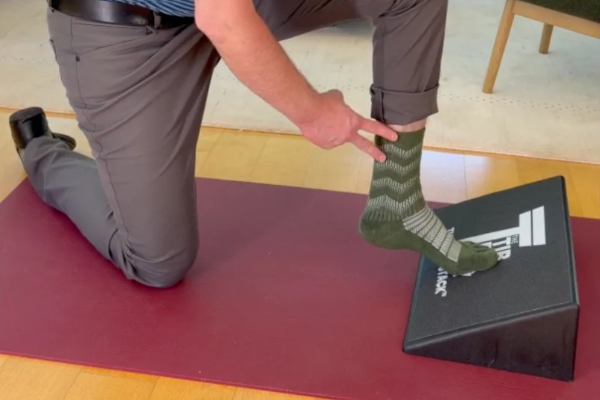
Slant Board Sessions: Improve Ankle Mobility and Relieve Foot Pain
Tight ankles and calves can contribute to more than restricted movement. In some cases, they may also play a role in persistent pain along the bottom of your foot — including symptoms that are sometimes mistaken for plantar fasciitis.
This slant board exercise focuses on improving ankle mobility and encouraging movement of the nerves that travel behind the ankle and into the foot.
How Can Tight Ankles Contribute to Foot Pain?
The tibial nerve travels down the inside of your calf, passes behind your inner ankle bone, and branches into nerves that supply the bottom of your foot. As your ankle bends and extends, this nerve needs to glide freely through the surrounding tissues.
When the muscles and tissues around the ankle become tight or restricted, they can sometimes interfere with that movement, potentially contributing to nerve irritation or compression. The resulting discomfort may be felt along the bottom of the foot rather than at the ankle itself.
This can be particularly relevant for runners, cyclists, or anyone experiencing persistent calf tightness.
A Real-World Example: Eric’s Experience
When my patient Eric experienced persistent heel pain that hadn’t responded to traditional plantar fasciitis treatments, I took a closer look at the muscles and nerves in his calf and ankle. As part of his treatment plan, I introduced targeted slant board exercises, including this one.
Within a week, Eric noticed significant improvement and was soon back to walking his dogs and exercising without pain.
Read Eric’s story to learn more about his recovery.
Watch: Slant Board Sessions — Tight Ankles
In the following video, I demonstrate how to use a slant board to improve ankle mobility, including gentle side-to-side knee movements and controlled pressure to encourage movement around the back of the ankle.
The goal is to improve movement through the ankle without forcing the stretch. Start slowly, stay within a comfortable range of motion, and avoid movements that cause pain, tingling, or numbness.
Quick Review
Need a refresher? This shorter video reviews the key movements and positioning so you can revisit the exercise without watching the full demonstration.
Dealing with Persistent Foot Pain or Tight Ankles?
If you’re experiencing ongoing foot pain, calf tightness, or restricted ankle mobility, our chiropractors can help identify what may be contributing to your symptoms and determine which exercises and treatment approaches are appropriate for you.
Schedule an appointment with one of our chiropractors to get started.


